
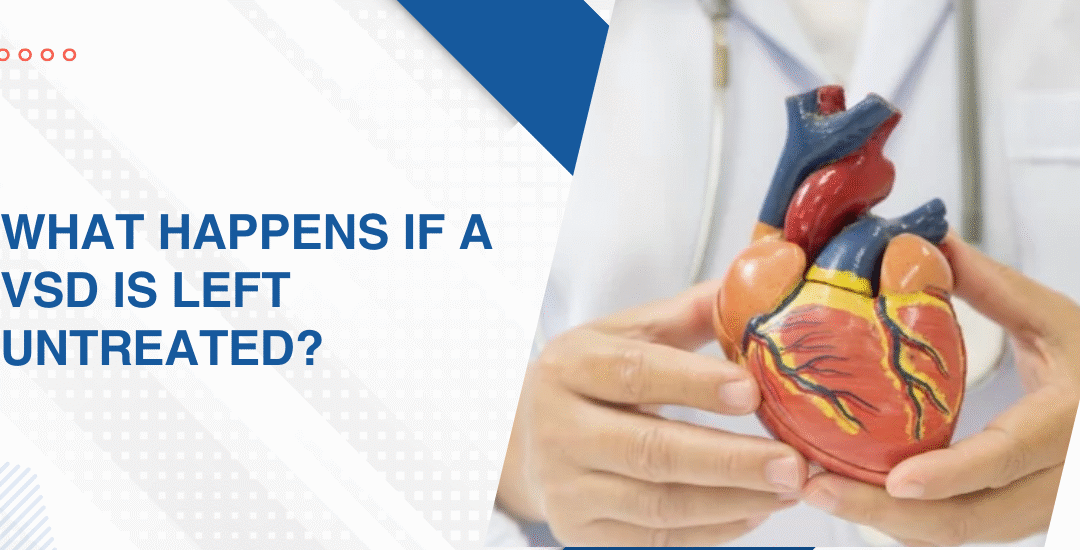
A ventricular septal defect is basically a hole between the heart’s two lower chambers. Most are picked up in infancy, usually when a paediatrician hears a murmur during a routine check. Some shut on their own in the first couple of years. The bigger ones rarely do. That’s where the worry actually starts.
According to Dr. Prashant Bobhate, an experienced Pediatric Cardiologist in Mumbai, “An untreated VSD doesn’t just sit there quietly, the lungs keep getting hit with extra blood every beat, and by the time symptoms show up clearly, the damage in the pulmonary vessels is usually already done.”
How does an untreated VSD damage the heart and lungs?
The problem with a moderate or large VSD is plain physics. Blood keeps shunting from the higher-pressure left side into the lower-pressure right side, and over the years it’s the lungs and heart that pay the price.
- Volume overload: The left chambers handle far more blood than they were ever meant to, and they slowly stretch out, the muscle thins, and at some point the pumping just isn’t what it used to be.
- Lung pressure: That nonstop high-flow stream into the pulmonary arteries thickens the vessel walls, the arteries lose their stretchiness, and pulmonary hypertension settles in well before anyone catches on.
- Heart failure clues: Babies with large VSDs often struggle through feeds, sweat heavily during a bottle, fall behind on weight, and pick up one chest infection after another, simply because the heart can’t keep pace with what their growing body is asking for.
- Eisenmenger syndrome: This is the point of no return, lung pressures climb so high that blood actually starts flowing the wrong way across the defect, and once you reach there, closing the hole is no longer on the table.
If your child’s diagnosis is sitting in some old file and reviews have slipped, getting a fresh congenital heart disease evaluation is honestly the most important step right now.
What long-term problems do adults face with an unrepaired VSD?
Adults walking around with an unrepaired moderate VSD into their thirties and forties tend to deal with a different set of issues. Most of them sneak up. No drama, just slow drift.
- Arrhythmias: Years of subtle chamber stretching mess with the heart’s wiring, and atrial fibrillation, sometimes ventricular rhythms, tends to show up somewhere between the third and fifth decade.
- Endocarditis risk: The turbulent jet of blood crossing the defect makes a perfect spot for bacteria to settle, and that’s exactly why dental hygiene and antibiotic cover before certain procedures matter way more than most patients realise.
- Exercise tolerance: Patients who feel reasonably fine at rest often notice they get winded faster than friends their age on a flight of stairs, and a simple lung pressure check usually explains the gap.
- Pregnancy concerns: Women with moderate or large unrepaired VSDs face genuinely higher risks through pregnancy, and if pulmonary hypertension has already set in, the maternal risk shifts into a serious zone.
Our blog on pulmonary hypertension warning signs is worth a read if any of this is starting to sound familiar.
Why Choose Dr. Prashant Bobhate for a VSD in Mumbai?
Dr. Prashant Bobhate works across paediatric cardiology, congenital heart disease, and pulmonary hypertension at Children’s Heart Centre, Kokilaben Hospital Andheri, and the day-to-day case mix runs from newborn echo screenings to complex adult congenital follow-ups. What patients consistently mention is how plainly the long-term picture gets put on the table at the first visit, no padding, no vague timelines, just a clear sense of where things are headed over the next five or ten years depending on the call you make today.
Schedule a consultation to understand what happens if a VSD is left untreated
FAQs
Can a small VSD close on its own?
Many small muscular VSDs do close on their own by age five with regular monitoring.
How is an untreated VSD usually picked up in adults?
Often through a loud murmur on examination or an echo done for unrelated symptoms.
Is open-heart surgery the only option for closure?
No, several VSDs can now be closed using a catheter-based device closure procedure.
What happens once Eisenmenger syndrome sets in?
Closure isn’t possible at that stage, treatment focuses on controlling pulmonary pressures and symptoms.
References:
- Ventricular Septal Defect Overview — American Heart Association
- Long-term Outcomes of Unrepaired VSD — National Library of Medicine