
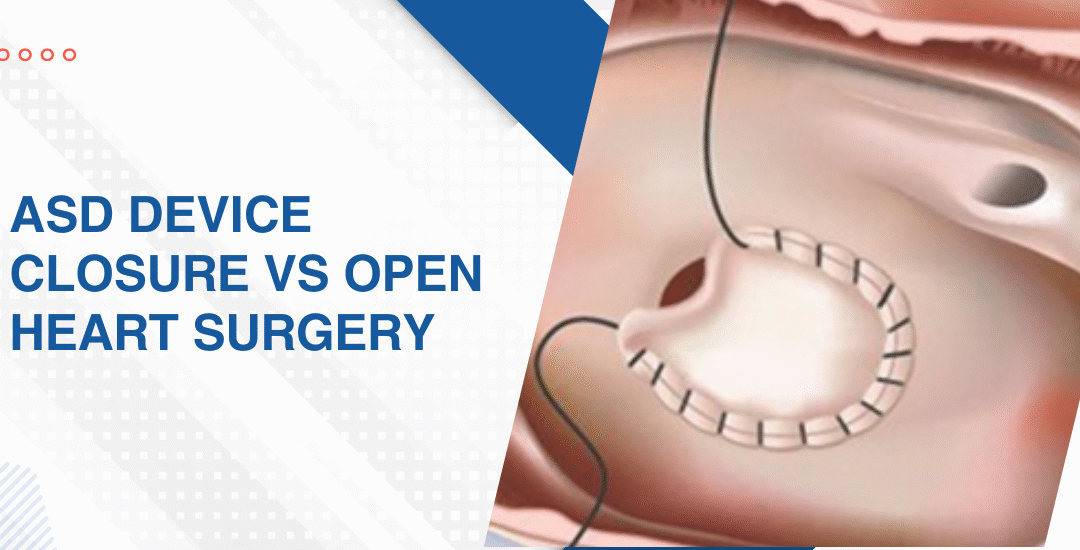
Neither is universally better. Device closure is less invasive, faster recovery, no chest opening, but it only works for specific ASD types and sizes where the anatomy actually supports a device sitting securely inside the defect. Open heart surgery works for virtually every ASD but carries a longer recovery and the risks that come with any procedure on cardiopulmonary bypass. The anatomy decides. Not the preference.
“Parents come in wanting to know which option is better and I always tell them the same thing. The better option is the one your child’s anatomy makes possible and safe. Starting from a preference and working backwards to the anatomy is the wrong way around completely,“ says Dr. Prashant Bobhate, Pediatric Cardiologist in Mumbai, India
What Makes Device Closure the Right Choice for Some ASDs?
Device closure works when the anatomy genuinely supports it and in those cases it’s a genuinely attractive option because it avoids open heart surgery entirely while achieving the same haemodynamic result if the defect sits in the right location with enough tissue rim around it.
- Secundum ASDs: The most common ASD type and the one most suitable for device closure because it sits in the middle of the atrial septum where catheter access is straightforward and where the tissue rim around the defect is usually adequate to anchor a device securely.
- Size matters: Defects up to around 38 to 40mm can potentially be closed by device but the ratio of defect size to total septal length matters as much as the raw measurement and that assessment only comes from a detailed echo in experienced hands.
- Rim adequacy: A defect with poor rim tissue near the aorta or the pulmonary veins can’t hold a device properly regardless of its size and deploying one anyway is how complications happen that a straightforward surgical repair would have avoided.
- Recovery difference: A child who has device closure goes home in one to two days, returns to normal activity within a week and carries no chest scar while a surgical repair means a week in hospital, six weeks of activity restriction and a sternotomy scar that lasts forever.
If your child has been told they have an ASD and needs assessment for the right closure approach, understanding what that decision involves starts with a proper atrial septal defect evaluation that maps the anatomy before anyone discusses options
When Does Open Heart Surgery Become the Only Answer?
When the anatomy rules device closure out.
- Sinus venosus ASDs: These sit near the entry of the pulmonary veins and no catheter device can close them safely or effectively which makes surgical repair the only appropriate option regardless of how much a family might prefer to avoid open heart surgery.
- Large deficient rims: When the tissue border around the defect is too thin or absent in multiple directions a device has nothing solid to grip and the risk of embolisation or erosion into adjacent cardiac structures makes surgery the clearly safer path.
- Associated anomalies: Some ASDs come with partial anomalous pulmonary venous drainage or other structural problems that need direct surgical correction at the same time and a catheter in the femoral vein simply can’t address everything that needs fixing in that situation.
- Failed device attempt: Occasionally a device closure is attempted, the anatomy doesn’t cooperate and the procedure is abandoned in favour of surgery and a centre experienced in both approaches can pivot without the family losing time or the child losing ground.
Parents wanting to understand where unrepaired cardiac shunts eventually lead when they go unaddressed for too long should read this piece on when lung transplant becomes necessary for pulmonary hypertension because the pressure consequences of an untreated ASD don’t always wait as long as people assume.
Why Choose Dr. Prashant Bobhate for ASD Closure in Mumbai?
An ASD assessment isn’t just measuring the hole. It’s reading the rim tissue, assessing the relationship to the pulmonary veins, understanding what the right atrium has already absorbed and then giving a family a clear answer about which approach is actually on the table for their child and why. Not a default recommendation. A real anatomical decision. Dr. Prashant Bobhate has spent over 12 years performing interventional paediatric cardiology including catheter-based ASD closures and managing the surgical planning pathway for defects that need open repair at the Children’s Heart Centre, Kokilaben Dhirubhai Ambani Hospital.
Schedule a consultation to find out if a cure is possible and what the right treatment plan looks like for you.
FAQs
Is device closure safer than open heart surgery for ASD?
For suitable anatomy yes because it avoids cardiopulmonary bypass entirely but in anatomy that doesn’t support a device attempting catheter closure is riskier not safer than going straight to surgery.
At what age can ASD device closure be done?
Generally from around two years and above depending on body weight and defect size but timing depends on the haemodynamic impact the defect is having not on reaching a specific birthday.
Can an ASD close on its own without any procedure?
Small secundum ASDs in infants sometimes close spontaneously in the first two years of life but moderate and large defects rarely do and need either device closure or surgical repair before the right heart absorbs cumulative damage.
How long does ASD device closure take?
The procedure itself usually takes around 30 to 60 minutes under general anaesthesia and most children go home the following day with a follow-up echo scheduled at one month to confirm the device is sitting correctly.
References:
- Atrial Septal Defect, MedlinePlus, U.S. National Library of Medicine — https://medlineplus.gov/ency/article/000097.htm
- Congenital Heart Defects, National Heart Lung and Blood Institute — https://www.nhlbi.nih.gov/health/congenital-heart-defects