
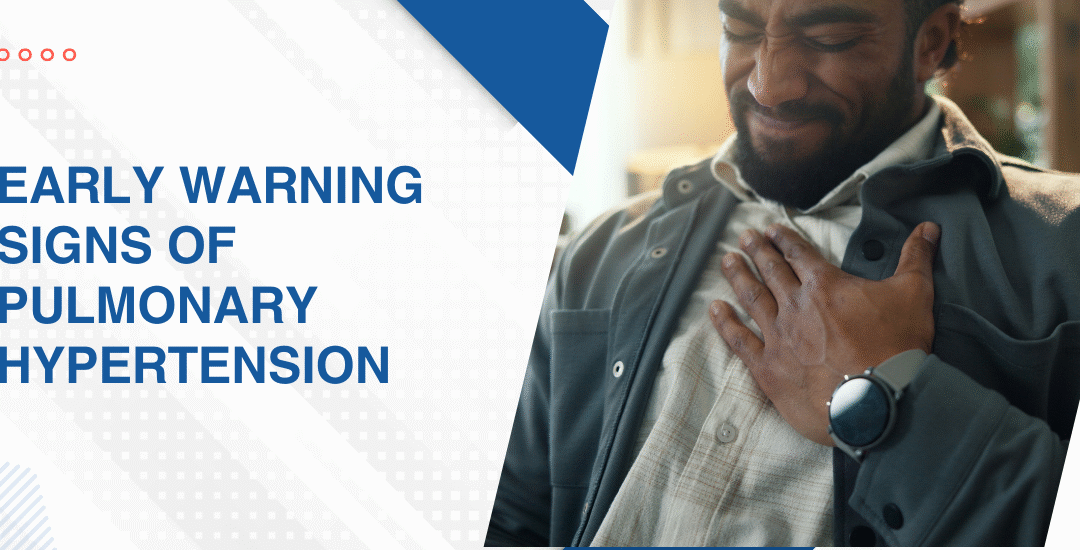
Typically, the first signs of pulmonary hypertension (PH) occur gradually and may go unnoticed by a person experiencing them. Symptoms can include but not be limited to: unexplained shortness of breath (especially with activity), fatigue, and deterioration in ability to complete physical activities. Other common symptoms that may accompany the above-referenced symptoms include dizziness, lightheadedness, chest pain/pressure, and palpitations.
“The warning signs of pulmonary hypertension are easy to explain away. That’s exactly what makes them dangerous,” says Dr. Prashant Bobhate, Pediatric Cardiologist in Mumbai, India.
What Early Signs Does Pulmonary Hypertension Actually Show Up As?
This is the part worth reading carefully. Because none of these signs arrive wearing a label. They don’t come with a note attached saying this is your heart and lungs struggling.
- Breathlessness doing things that never used to be an effort: Walking to the car, climbing one flight of stairs, carrying shopping in from the door, suddenly these feel harder than they should and that specific shift is the thing most people spend months dismissing as being unfit.
- Fatigue that sleep genuinely doesn’t fix: Not ordinary tired after a long week. A bone deep exhaustion that’s sitting there regardless of how much rest you get and that keeps showing up without any obvious reason to explain it.
- Feeling faint or actually fainting during activity: The body isn’t getting enough oxygenated blood to where it needs to go and that gap between supply and demand becomes most obvious the moment any real physical demand gets placed on the system.
- Swelling in the ankles or legs that keeps coming back: The right side of the heart struggling against high lung pressure starts backing up and that fluid has to go somewhere and it tends to settle in the legs first before anywhere else.
All of these signs together point toward pulmonary hypertension and the sooner they get properly investigated the more treatment options stay on the table for you.
What Warning Signs in Children Are Different From Adults?
Children can’t sit across from you and say I feel breathless or my legs feel heavy today. So the signs show up differently and if you don’t know what you’re looking for it is genuinely very easy to miss them entirely.
- A child who keeps stopping during play when other kids don’t: Not laziness. Not personality. A child who consistently needs to sit down and catch their breath while everyone else is still going is showing you something important about what’s happening inside.
- Feeds that exhaust a baby before they’re even halfway done: Feeding takes enormous effort for a baby with pulmonary hypertension and what looks like a fussy feeder or a preference thing is often actually the heart and lungs running out of capacity mid-feed.
- Bluish colour appearing around the lips or fingertips: This one doesn’t belong on a child ever. It means blood oxygen is low enough to be visible on the skin and that is not a situation that gets better by waiting to see what happens next week.
- A baby or child who just seems off in a way you can’t fully explain: Parents often describe this as a gut feeling that something isn’t right long before any specific sign becomes obvious enough to point to and that instinct is almost always worth following up on properly.
Parents carrying that gut feeling right now should read this piece on how to spot the early signs of heart disease in neonates which goes through what these warning signals actually look like in the first weeks and months of life when everything still feels uncertain.
Why Choose Dr. Prashant Bobhate for Pulmonary Hypertension Treatment in Mumbai?
When warning signs have been going on for a while the last thing you need is a doctor who treats your file not you. Dr. Prashant Bobhate actually listens to what you’ve been noticing, takes the timeline seriously and builds his assessment around your specific situation not a standard checklist. He spent over 12 years going deep into pulmonary hypertension specifically. Trained at Escorts Heart Institute in New Delhi then went to the University of Alberta in Canada purely for advanced fellowship training in this one area. His clinic is the only dedicated multidisciplinary pediatric pulmonary hypertension programme in India right now. Over 400 children on advanced therapy. India’s first successful Transcatheter Potts Shunt. He works from what’s actually happening. Not from what usually happens.
A proper evaluation gives you real answers about what’s happening inside those lung arteries and what actually needs to happen next for your child or family member.
FAQs
How early can pulmonary hypertension warning signs appear in children?
From the very first weeks of life in babies born with congenital heart defects or those who had complicated deliveries.
Can pulmonary hypertension warning signs come and go at first?
Yes and that’s exactly what makes them easy to dismiss because some days feel fine and that feeling of fine makes people put off getting it looked at properly.
Can a child with early pulmonary hypertension seem completely normal most of the time?
Absolutely. Children compensate remarkably well in the early stages and can appear perfectly fine while the pressure inside the lung arteries is already quietly climbing.
Are breathlessness and tiredness always signs of pulmonary hypertension?
Not always but when they keep coming back without a clear explanation and get gradually worse over time they deserve a proper cardiac evaluation not just a wait and see approach.
References:
- Pulmonary Hypertension Overview, National Heart Lung and Blood Institute — https://www.nhlbi.nih.gov/health/pulmonary-arterial-hypertension
- Pulmonary Hypertension, MedlinePlus, U.S. National Library of Medicine — https://medlineplus.gov/pulmonaryhypertension.html