
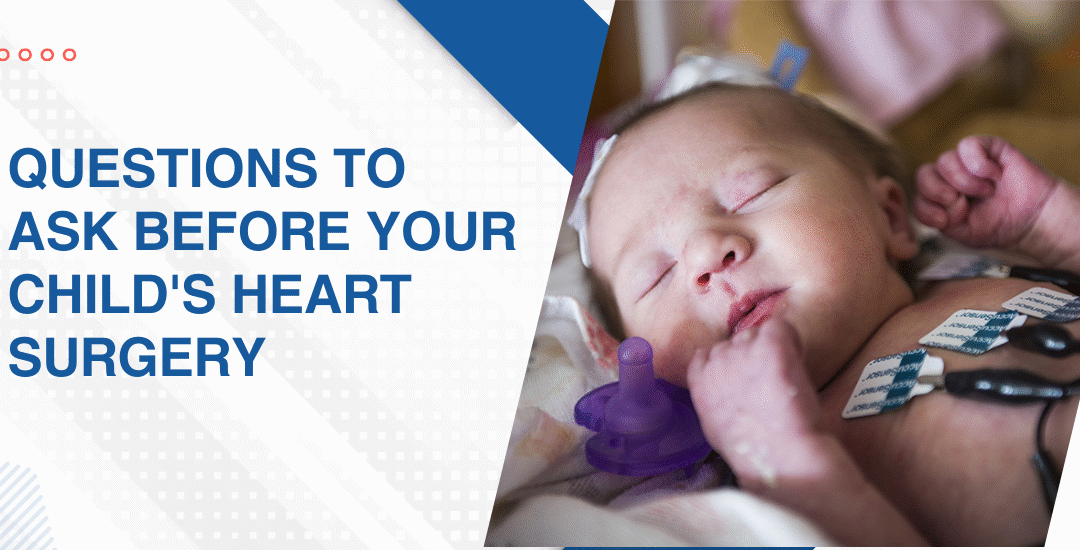
Ask everything. Before the surgery date is the only time every question has a calm, considered answer. What defect is being repaired and why now. What the procedure involves step by step. What the ICU will look like when you first see your child after. What the recovery timeline is. What the risks are for this specific child, not the average child in a textbook. Write them down. Bring the list.
“I tell every family the same thing at the pre-surgical appointment. If you leave this room with an unanswered question that’s on me not on you. Ask it again, ask it differently, ask it as many times as you need until the answer actually makes sense to you,” says Dr. Prashant Bobhate, Pediatric Cardiologist in Mumbai, India.
What Should You Ask the Surgical and Cardiac Team?
The clinical questions are the ones most families forget to ask because the emotional weight of the appointment crowds them out and then they remember them at two in the morning three days later.
- Why now: Ask specifically why surgery is recommended at this point rather than earlier or later because the timing of paediatric cardiac surgery is a deliberate clinical decision based on pressure measurements, growth trajectory and ventricular function and you deserve to understand the reasoning not just accept the date.
- What exactly happens: Ask the surgeon to walk through the procedure in plain language, what the chest opening involves, how bypass works, how long the heart will be stopped and what the team does during that time because parents who understand the steps are far less consumed by catastrophic imagination in the waiting room.
- What are the real risks: Ask for the specific risks for your child’s defect and age not a generic list off a consent form because a VSD closure in a healthy eight month old carries different risk than the same procedure in a child with rising pulmonary pressures or a concurrent infection and you need to understand which conversation you’re actually in.
- What does success look like: Ask what a good outcome means for this specific defect because for some repairs success means complete correction and a normal life and for others it means significant improvement with ongoing monitoring and that distinction matters enormously for how a family orients their expectations going forward.
Getting a full picture of what paediatric cardiac intervention involves and what specialist-level care looks like before making any surgical decision is exactly what a thorough congenital heart disease consultation provides before any admission date is set.
What Questions Cover the Recovery and After?
Equally important. Most families forget these entirely.
- ICU timeline: Ask how long your child is expected to be in cardiac ICU, what they’ll look like when you first see them after surgery and which tubes, lines and monitors to expect because the first post-operative ICU visit is significantly less frightening when you’ve been told in advance what you’ll see walking through that door.
- Pain management: Ask specifically how pain is managed in the post-operative period because a child in uncontrolled pain after cardiac surgery recovers more slowly and parents who advocate clearly for adequate analgesia get better outcomes than those who assume the team will manage it without being asked.
- Discharge criteria: Ask what the team needs to see before your child goes home because families who know the specific milestones, feeding tolerance, oxygen levels, wound healing, understand why discharge is or isn’t happening rather than feeling helpless in a waiting pattern with no visible end.
- Follow-up schedule: Ask exactly when the first post-operative echo is, what it’s looking for, who does it and what would prompt an earlier return because going home after open heart surgery without a clear follow-up plan in hand is something no family should accept at discharge regardless of how busy the ward is.
Parents wanting to understand what the warning signs of cardiac deterioration look like in children in the weeks after any major cardiac procedure should read this piece on top 5 warning signs of pediatric heart failure because knowing what to watch for at home is as important as knowing what happened in the operating theatre.
Why Choose Dr. Prashant Bobhate for Children's Heart Surgery in Mumbai?
A family walking into a pre-surgical appointment deserves a cardiologist who has time for every question including the ones they’re embarrassed to ask and the ones they don’t yet know they need to ask. Not a fifteen minute slot before the next patient. A real conversation that leaves nobody confused about what’s coming. Dr. Prashant Bobhate has spent over 12 years preparing families for paediatric cardiac surgery across every defect complexity and every level of prior medical knowledge at the Children’s Heart Centre, Kokilaben Dhirubhai Ambani Hospital. Escorts Heart Institute New Delhi. Fellowship at University of Alberta Canada. Over 400 children on active cardiac therapies right now. He doesn’t move on until the family understands. That’s not a service promise. It’s just how the appointments run.
📞 Call Now: (+91) 8080 826 898 A proper pre-surgical consultation answers every question about the procedure, the recovery and what comes after so your family walks into that surgery date knowing exactly what to expect at every stage.
Schedule a consultation to find out if a cure is possible and what the right treatment plan looks like for you.
FAQs
How do I prepare a list of questions for my child's heart surgery appointment?
Write down every worry that wakes you up at night because those are the real questions and bring the list to the appointment rather than trying to remember them in the room under pressure.
Should both parents attend the pre-surgical consultation?
Yes if possible because two people in the room hear differently, catch different things and can check each other’s understanding in the car home rather than one person carrying the entire information load alone.
Is it normal to feel scared asking questions about risks before heart surgery?
Completely normal but asking about risks before surgery is always better than not knowing them because understanding the real risk picture for your specific child is what informed consent actually means.
What if I think of more questions after leaving the appointment?
Call or message the team because no question that arrives after a pre-surgical appointment is too late or too minor to deserve an answer before the surgery date arrives.
References:
- Congenital Heart Defects, MedlinePlus, U.S. National Library of Medicine — https://medlineplus.gov/congenitalheartdefects.html
- Congenital Heart Defects, National Heart Lung and Blood Institute — https://www.nhlbi.nih.gov/health/congenital-heart-defects