
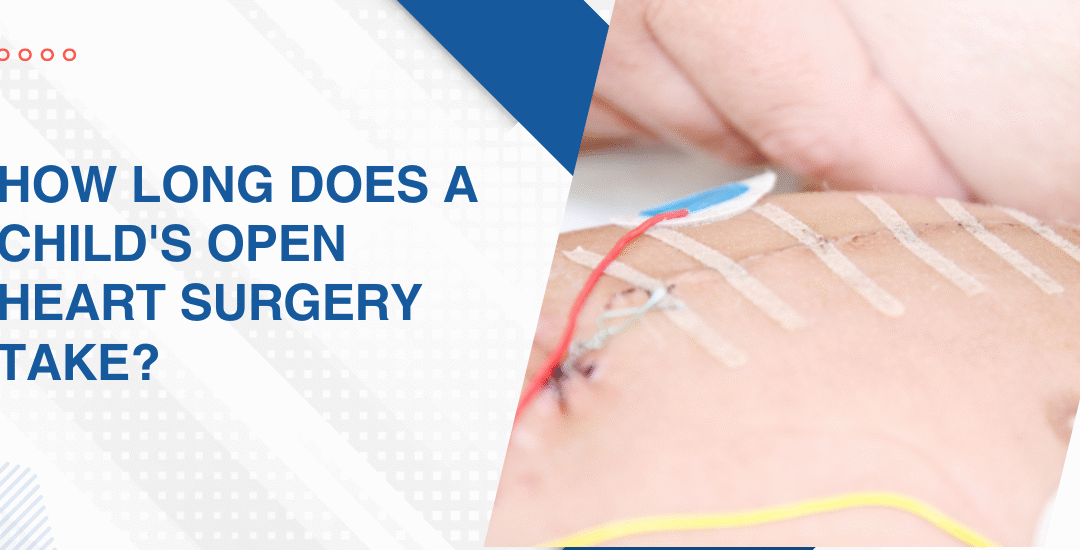
A child’s open-heart surgery usually takes about 3 to 6 hours, although more complex procedures may take longer. During the operation, the child is placed on a heart-lung machine. After surgery, most children require 2 to 4 days in the ICU, followed by a total hospital stay of around 5 to 7 days. In more complex cases, recovery in the hospital can extend to several weeks.
“Families fixate on the duration in the waiting room and I understand why but the number that actually matters isn’t how long the surgery took it’s what the surgeon says when they come out to tell you how it went,” says Dr. Prashant Bobhate, Pediatric Cardiologist in Mumbai, India.
What Determines How Long the Surgery Actually Takes?
The anatomy underneath the diagnosis is what sets the surgical clock and two children with the same condition can have repairs of very different complexity and duration depending on what the surgeon actually encounters.
- Defect type: Simple secundum ASD or isolated VSD closures are among the shorter cardiac procedures, while complex repairs involving outflow tract reconstruction, valve work or multiple simultaneous defects add significant time under bypass that straightforward closures don’t need.
- Bypass time: The time the heart is stopped and the child is on cardiopulmonary bypass is the most clinically significant part of the duration because longer bypass times carry a higher risk of post-operative complications, and surgeons manage this carefully, not just to be efficient but because it directly affects outcomes.
- Unexpected findings: Sometimes the anatomy is more complex than the pre-operative echo suggested, an additional defect is found, a valve is more abnormal than imaging showed or tissue quality requires a different repair approach and all of these extend theatre time in ways nobody could predict before opening the chest.
- Redo surgery: A child who has already had one cardiac operation and needs a second carries scar tissue, adhesions and altered anatomy from the first repair and dissecting through that safely adds significant time before the actual correction even begins.
Understanding what a child’s specific defect requires in terms of surgical repair and what the recovery looks like afterwards is exactly what a thorough congenital heart disease consultation maps out before any theatre date is confirmed.
What Happens While You Are Waiting?
The hardest hours most cardiac families will ever sit through.
- Bypass team updates: Most centres provide a liaison nurse or team member who updates the waiting family at key surgical milestones and if your centre doesn’t offer this ask specifically before admission day because waiting six hours in silence is genuinely harder than it needs to be.
- Why it’s taking longer: A surgery running over the estimated time doesn’t automatically mean something has gone wrong and it’s often the surgeon being more careful or finding something that needed extra attention rather than an emergency and the team should be telling you which it is.
- Anaesthesia and bypass monitoring: While the surgeon works a separate team manages the bypass circuit, the anaesthesia, the child’s temperature, blood pressure and organ perfusion continuously and the size of the team in that theatre is something most families never see and would find reassuring if they did.
- Coming out of bypass: Weaning the heart off cardiopulmonary bypass and restoring normal rhythm is a distinct phase at the end of the operation that can itself take thirty minutes to an hour and families told the surgery is finishing should expect another wait before the surgeon actually appears in the waiting area.
Parents wanting to understand what the warning signs of cardiac deterioration look like in children in the days and weeks after open heart surgery should read this piece on the top 5 warning signs of pediatric heart failure, because knowing what to watch for at home is as important as understanding what happened in the operating theatre.
Why Choose Dr. Prashant Bobhate for VSD Device Closure in Mumbai?
A family sitting in a waiting room for four hours deserves a team that keeps them informed, prepares them before the surgery for what longer theatre times might mean and doesn’t leave them alone with catastrophic imagination filling the silence. That preparation starts at the pre-surgical cardiology appointment not on the day. Dr. Prashant Bobhate has spent over 12 years preparing families for paediatric cardiac surgery across every defect type and complexity at the Children’s Heart Centre, Kokilaben Dhirubhai Ambani Hospital. Escorts Heart Institute New Delhi.
Schedule a consultation to find out if a cure is possible and what the right treatment plan looks like for you.
FAQs
How long does a VSD repair take in a child?
Roughly two to three hours including bypass time for a straightforward isolated VSD but complex anatomy, additional defects or difficult tissue can extend the duration beyond what the pre-operative estimate suggested.
Is longer surgery more dangerous for a child's heart?
Longer bypass time does carry higher post-operative risk which is why surgeons actively manage bypass duration but a complex repair done carefully over six hours is safer than a rushed repair done poorly in three.
Why does a re-do heart surgery take longer in children?
Scar tissue and adhesions from the first operation have to be carefully dissected before the actual correction can begin and that process alone adds significant time before the repair itself even starts.
How will I know if my child's surgery is taking too long?
Ask the centre before admission day to assign a liaison who updates the family at key milestones because no family should have to guess what’s happening in that theatre for hours without any communication from the team.
References:
- Congenital Heart Defects, MedlinePlus, U.S. National Library of Medicine — https://medlineplus.gov/congenitalheartdefects.html
- Congenital Heart Defects, National Heart Lung and Blood Institute — https://www.nhlbi.nih.gov/health/congenital-heart-defects