
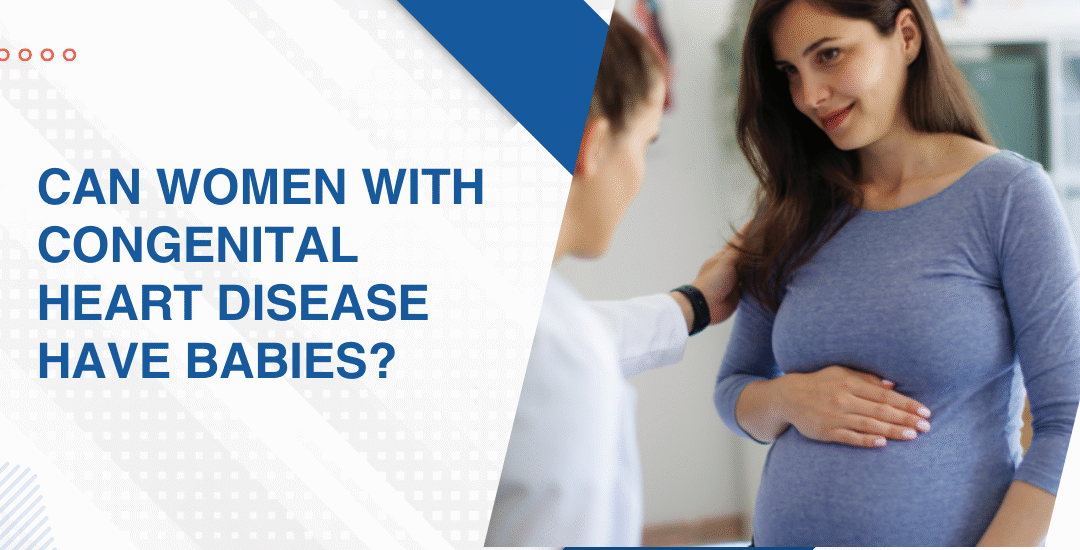
Yes, Most women with congenital heart disease can safely have children but pregnancy carries real risks including arrhythmia, heart failure and stroke that vary significantly by defect type and repair history. It requires specialised care from a team including a cardiologist and maternal-fetal medicine specialist and that conversation needs to start before conception not after a positive test arrives.
“I’ve seen women with complex congenital heart disease carry pregnancies to term and do well and I’ve seen women with seemingly simple repaired defects run into problems nobody anticipated because nobody did a proper pre-conception cardiac evaluation before they conceived,” says Dr. Prashant Bobhate, Pediatric Cardiologist in Mumbai, India.
What Makes Pregnancy Risky for Women With Congenital Heart Disease?
Pregnancy puts the cardiovascular system under a sustained haemodynamic load and a heart already managing abnormal anatomy handles that load very differently from a structurally normal one.
- Blood volume surge: Pregnancy increases blood volume by 40 to 50 percent and a heart with limited functional reserve can decompensate rapidly under that sustained demand even if it was compensating adequately before conception.
- Arrhythmia risk: The haemodynamic and hormonal changes of pregnancy lower the arrhythmia threshold and atrial flutter, SVT and ventricular arrhythmias can emerge in women who had no rhythm history whatsoever before conceiving.
- Pulmonary hypertension: Women with pulmonary arterial hypertension face the highest maternal mortality risk of any cardiac condition in pregnancy because systemic vasodilation against fixed pulmonary vascular resistance can deteriorate rapidly and catastrophically.
- Fontan circulation: The passive pulmonary blood flow that sustains a Fontan depends on venous pressure gradients that pregnancy disrupts and obstetric outcomes in Fontan patients need the most experienced multidisciplinary team available.
Every woman with a congenital heart diagnosis considering pregnancy deserves a full structural and functional assessment and congenital heart disease evaluation before conception maps current anatomy, ventricular function and pulmonary pressures before any pregnancy planning moves forward.
What Does Safe Pregnancy Look Like for Women With CHD?
Planned, monitored and never managed alone by a single specialist.
- Pre-conception counselling: A cardiac assessment before attempting pregnancy establishes the current baseline of ventricular function, pulmonary pressure and rhythm status so any changes during pregnancy can be measured against something real rather than guessed at.
- Medication review: Several cardiac medications including warfarin, ACE inhibitors and some antiarrhythmics carry real fetal risk and switching to pregnancy-safe alternatives before conception is far safer than scrambling to change them after a positive test.
- High-risk obstetric co-management: A maternal-fetal medicine specialist needs to be part of the team from the start because delivery timing, mode of delivery and anaesthetic approach all have cardiac implications that require both teams aligned well before the moment arrives.
- Delivery planning: Women with significant CHD need delivery at a centre with cardiac anaesthesia, adult congenital cardiology and a cardiac ICU on site because the haemodynamic shift immediately after delivery is one of the highest-risk moments in the entire pregnancy.
Parents wanting to understand the long-term journey of congenital heart care should also explore surgery costs, as treatment planning often begins early and financial preparation plays an important role in managing cardiac care from childhood onward
Why Choose Dr. Prashant Bobhate for Cardiac Care in Pregnancy With CHD in Mumbai?
A woman with congenital heart disease who wants to have children needs a cardiologist who understands what her specific anatomy does under the haemodynamic load of pregnancy, can advise on medication changes before conception and can coordinate with the obstetric team across the full nine months rather than showing up only when something goes wrong. Dr. Prashant Bobhate has spent over 12 years managing adult congenital heart disease including pre-conception counselling and pregnancy planning for women with complex repaired and unrepaired cardiac conditions at the Children’s Heart Centre, Kokilaben Dhirubhai Ambani Hospital.
Schedule a consultation to find out if a cure is possible and what the right treatment plan looks like for you.
FAQs
Is it safe to get pregnant with a repaired congenital heart defect?
For many women yes but safety depends on the specific defect, repair type, current ventricular function and pulmonary pressures and needs a formal assessment not an assumption based on how well the woman feels.
Which congenital heart conditions make pregnancy most dangerous?
Pulmonary arterial hypertension carries the highest maternal mortality risk followed by unrepaired cyanotic defects, Fontan circulation and severe left heart obstruction which all need the most intensive pre-pregnancy evaluation.
Can a woman with congenital heart disease pass it to her baby?
Yes with most congenital cardiac conditions carrying a 3 to 5 percent recurrence risk in offspring and fetal echocardiography during pregnancy is recommended for all women with a known congenital heart diagnosis.
When should a woman with CHD start planning for pregnancy?
At least six to twelve months before attempting conception to allow time for cardiac assessment, medication review and specialist team coordination before any haemodynamic stress begins.
References:
- Congenital Heart Defects, MedlinePlus, U.S. National Library of Medicine — https://medlineplus.gov/congenitalheartdefects.html
- Congenital Heart Defects, National Heart Lung and Blood Institute — https://www.nhlbi.nih.gov/health/congenital-heart-defects