
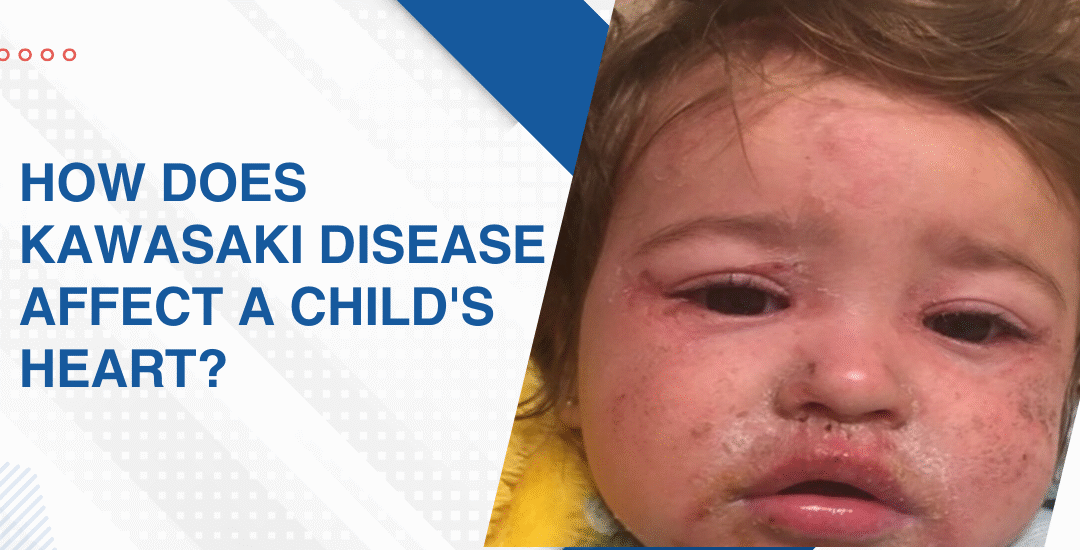
Kawasaki disease causes inflammation of blood vessels, primarily the coronary arteries that supply blood to the heart muscle itself. The most serious consequence is coronary artery aneurysms, weakened bulging vessel walls that can clot, narrow and trigger a heart attack in a child who should have had decades of normal cardiac life ahead. If it goes undetected or gets caught late, that damage doesn’t announce itself. It just builds.
“Most families I see have never heard of Kawasaki disease before the day their child was diagnosed and that gap between symptom onset and anyone thinking to check the coronary arteries is exactly where the damage quietly accumulates,“ says Dr. Prashant Bobhate, a Pediatric Cardiologist in Mumbai, India.
What Challenges Do Adults With Congenital Heart Defects Face?
It inflames the coronary arteries, weakens the vessel walls and in serious cases leaves behind aneurysms that don’t resolve and don’t forgive delays in detection.
- Coronary aneurysms: Inflammation attacks the coronary artery walls directly and weakens them enough to bulge outward into structures that can clot, obstruct and eventually cause a myocardial infarction in a child whose peers are still in primary school.
- Myocarditis: The heart muscle itself inflames during the acute illness alongside the vessels feeding it which explains why some children look far sicker than the fever alone would account for and why cardiac function needs active monitoring from day one not just at a follow-up echo weeks later.
- Valve involvement: Mitral regurgitation develops in a small number of Kawasaki cases because inflammation affects the supporting structures of the valve alongside the coronary vessels and it’s worth looking for specifically on every acute phase echo rather than assuming valve integrity because the child appears clinically stable.
- Electrical changes: Arrhythmias including prolonged QT interval occur during the acute inflammatory phase in some children and while these typically settle as inflammation resolves they’re another reason cardiac involvement needs evaluating from the start and not treated as an afterthought once the fever breaks.
Tracking exactly what the coronary arteries look like and how the heart muscle is functioning after Kawasaki is exactly what dedicated 2D echocardiography for children maps out properly before any long term management decision gets made.
How Is the Heart Watched After Kawasaki Disease?
This is where many children fall through the gap entirely.
- Echo surveillance schedule: Frequency depends entirely on the coronary findings at diagnosis and a child with no coronary involvement confirmed at six weeks has a completely different surveillance need to one with a persistent medium aneurysm that’s still being tracked every few months.
- Anticoagulation decisions: Children with large or giant coronary aneurysms need anticoagulation or antiplatelet therapy to reduce clot risk inside those weakened vessels and the choice between aspirin, warfarin and low molecular weight heparin depends on aneurysm size, age and the child’s overall clinical picture.
- Stress testing as the child grows: A school-age child who had significant coronary involvement as a toddler needs periodic exercise stress testing as they get older because a narrowed coronary artery compensated at rest can reveal itself dramatically under physical load in ways a resting echo simply won’t catch.
- Long term follow up into adulthood: Kawasaki is not a paediatric problem that ends at eighteen and adults who had giant aneurysms as children need specialist cardiac follow up that understands acquired coronary disease in a congenital context rather than a general cardiologist seeing an unusual presentation they weren’t trained to manage.
Parents wanting to understand what cardiac warning signs look like in children before any formal diagnosis gets made should read this piece on top 5 warning signs of pediatric heart failure because recognising when something is wrong early is always what changes what’s possible next.
Why Choose Dr. Prashant Bobhate for Kawasaki Heart Care in Mumbai?
You want someone who has read a Kawasaki echo on day five of the fever, tracked a medium coronary aneurysm across three years of follow-up appointments and had the honest conversation with parents about what a giant aneurysm means for their child’s cardiac future at forty. Not just what it means this week. Dr. Prashant Bobhate has spent over 12 years managing complex paediatric cardiac presentations including acquired coronary disease, myocarditis and the full range of inflammatory and congenital heart conditions across every age from newborn through adolescence at the Children’s Heart Centre, Kokilaben Dhirubhai Ambani Hospital.
Schedule a consultation to find out if a cure is possible and what the right treatment plan looks like for you.
FAQs
Can Kawasaki disease cause a heart attack in a child?
Yes and it’s the giant coronary aneurysms that carry the highest risk because a clot forming inside a weakened bulging artery in a five year old produces the same myocardial infarction physiology as it does in an adult with coronary disease.
How soon after Kawasaki disease should an echo be done?
Within the first week of diagnosis at minimum and then again at six to eight weeks because aneurysm formation can progress even after the fever resolves and the acute inflammation appears to have settled clinically
Does Kawasaki disease always affect the heart?
Not always but coronary artery abnormalities develop in around 25% of untreated children and even treated cases need echo surveillance because some coronary changes appear after the acute phase has apparently resolved.
Can a child fully recover from Kawasaki heart damage?
Small aneurysms often resolve within one to two years but giant aneurysms rarely regress completely and children carrying them into adulthood need lifelong cardiac surveillance regardless of how well they feel day to day.
References:
- Congenital Heart Defects, MedlinePlus, U.S. National Library of Medicine — https://medlineplus.gov/congenitalheartdefects.html
- Congenital Heart Defects, National Heart Lung and Blood Institute — https://www.nhlbi.nih.gov/health/congenital-heart-defects