
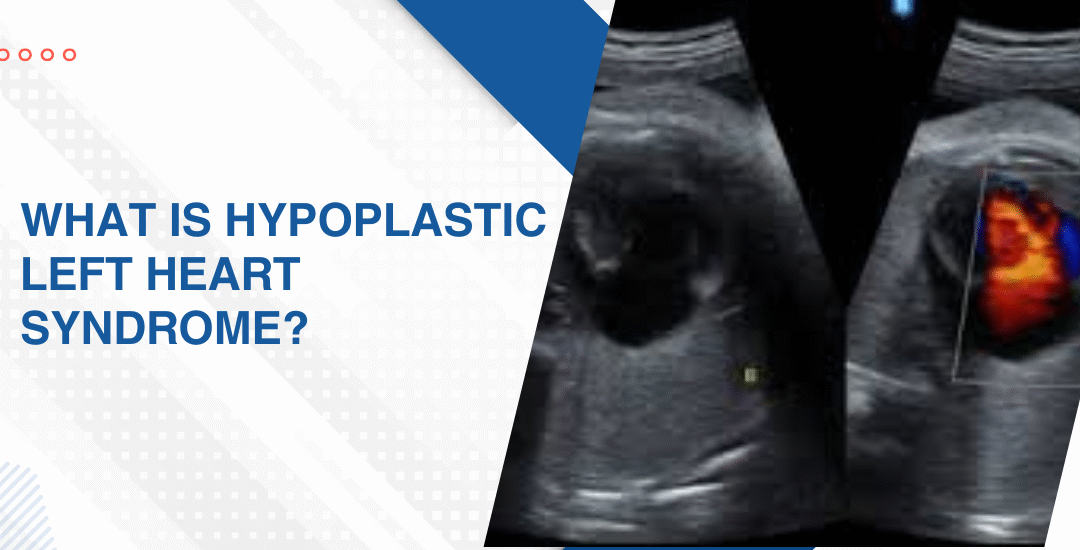
Hypoplastic left heart syndrome is a severe congenital defect where the left side of the heart never forms properly, leaving the left ventricle, valves, and aorta too small or missing, and the newborn cannot push oxygenated blood to the body on their own. Babies with HLHS need stabilisation within hours of birth and a planned series of three surgeries across early childhood.
“HLHS is one of the most challenging diagnoses a family can receive, but the outlook today is nothing like what it was two decades ago. With fetal detection, a planned delivery at a cardiac centre, and staged surgery, many of these children are now going to school, playing outside, and living active childhoods,” says Dr. Prashant Bobhate, Pediatric Cardiologist in Mumbai.
How HLHS affects a newborn's circulation
Hypoplastic left heart syndrome is a severe congenital defect where the left side of the heart never forms properly, leaving the left ventricle, valves, and aorta too small or missing, and the newborn cannot push oxygenated blood to the body on their own. Babies with HLHS need stabilisation within hours of birth and a planned series of three surgeries across early childhood.
“HLHS is one of the most challenging diagnoses a family can receive, but the outlook today is nothing like what it was two decades ago. With fetal detection, a planned delivery at a cardiac centre, and staged surgery, many of these children are now going to school, playing outside, and living active childhoods,” says Dr. Prashant Bobhate, Pediatric Cardiologist in Mumbai.
How HLHS affects a newborn’s circulation
The left heart in HLHS just isn’t there in any working sense, the ventricle is tiny, the valves are narrow or missing, and the aorta is underbuilt. A fetal vessel called the ductus arteriosus keeps the baby alive in the first day by pushing blood to the body, and once that vessel starts to close, things go downhill quickly.
- Warning signs show up early, poor feeding, fast breathing, a grey or bluish tint, weak pulses in the arms and legs, a baby who seems more and more sluggish
- Prostaglandin is the first move, it holds the ductus open while the diagnosis gets confirmed and the surgical team gets ready
- Fetal detection shifts everything, a 20-week scan picks up HLHS reliably, which means delivery can be booked at a hospital with a cardiac ICU in place
- The pathway is palliative, not curative, surgery rebuilds the circulation around the working right ventricle rather than fixing the left heart
HLHS sits at the complex end of pediatric cardiology, and outcomes really do track with how early the diagnosis gets picked up, which is why parents facing any serious congenital finding benefit from the wider context laid out on the congenital heart disease treatment page.
The three-stage surgical pathway for HLHS
Treatment runs across three surgeries, each one rewiring the plumbing so the single working right ventricle can eventually take on the whole body. The Norwood goes first in the newborn week, the Glenn follows at 4 to 6 months, and the Fontan finishes the rebuild between ages 2 and 4.
- Norwood stabilises blood flow to both the body and the lungs in the newborn period
- Glenn cuts the volume load on the single ventricle by shifting upper-body return straight into the lungs
- Fontan completes the single-ventricle circulation and is what allows school-age function and beyond
- Follow-up doesn’t stop with the Fontan, lifelong cardiology review tracks rhythm, liver, and exercise capacity into adulthood
Parents early in the diagnostic journey often find it useful to see how staged repair works for another major cyanotic defect, and the full walk-through on tetralogy of Fallot management covers timing, recovery, and what life looks like after repair.
Why choose Dr. Prashant Bobhate For Treatment Of Hypoplastic Left Heart Syndrome?
Dr. Prashant Bobhate has over 12 years of experience managing single-ventricle physiology, HLHS, and the broader complex congenital caseload at the Children’s Heart Centre, Kokilaben Dhirubhai Ambani Hospital, with training in India and Canada that runs across fetal echocardiography, pre-operative stabilisation, and follow-up through the Norwood, Glenn, and Fontan pathway into adult life.
Schedule a consultation to understand what is Hypoplastic Left Heart Syndrome
FAQs
Can HLHS be detected before birth?
HLHS is picked up on fetal echocardiography from around 18 to 22 weeks of pregnancy. Early detection allows delivery to be planned at a cardiac centre with the surgical team ready.
Is HLHS fatal without treatment?
HLHS is fatal within days to weeks without intervention, since the baby cannot circulate oxygenated blood on their own. Stabilisation and surgery are needed to survive infancy.
What is the long-term outlook after three-stage surgery?
Survival to adulthood after a completed Fontan is now common, with most children in school and taking part in age-appropriate activity. Lifelong cardiology follow-up remains essential.
Is a heart transplant ever needed for HLHS?
Transplant is considered when the staged pathway fails or the single ventricle weakens over time. It is reserved for specific cases rather than a first-line option.
References:
- Centers for Disease Control and Prevention, Facts about Hypoplastic Left Heart Syndrome — https://www.cdc.gov/heart-defects/about/hypoplastic-left-heart-syndrome.html
- American Heart Association, Single Ventricle Defects — https://www.heart.org/en/health-topics/congenital-heart-defects/about-congenital-heart-defects/single-ventricle-defects