
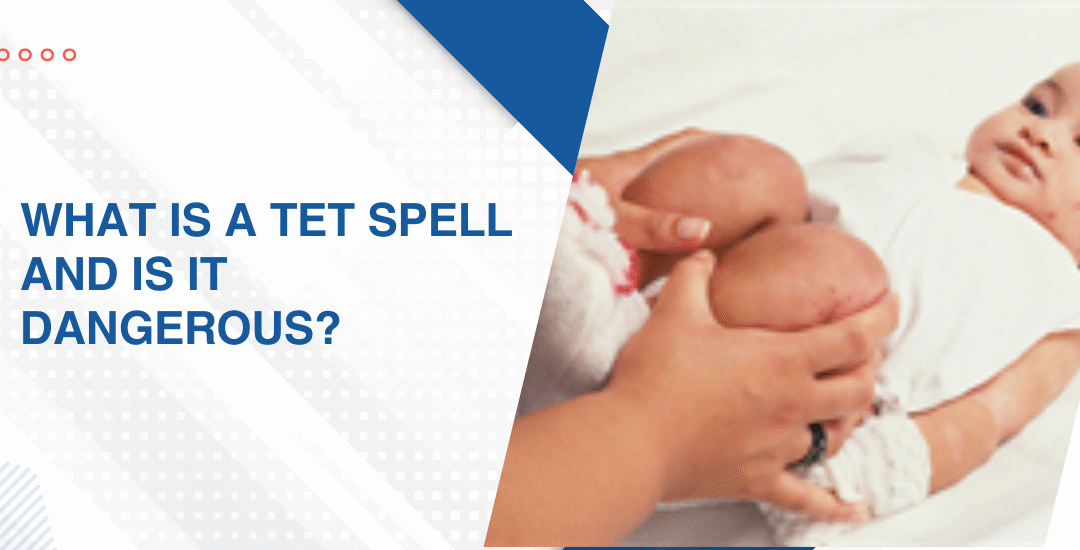
A tet spell is a sudden, sharp drop in a child’s blood oxygen caused by Tetralogy of Fallot, where the baby turns deeply blue, breathes rapidly, and can become limp or lose consciousness within minutes. The danger comes from duration, brief spells settle on their own with positioning, prolonged ones can trigger seizures, stroke, or cardiac arrest if treatment is delayed.
“A tet spell is one of the few pediatric cardiac events where parents actually see the crisis unfold in front of them, the lips go blue, the crying stops, the child goes floppy. Knowing what to do in those first 60 seconds changes the outcome,” says Dr. Prashant Bobhate, Pediatric Cardiologist in Mumbai.
What actually happens during a tet spell?
The physiology of a tet spell sits on the anatomy already present in Tetralogy of Fallot, the pulmonary valve is narrow, the right ventricular outflow tract is tight, and the VSD sits right under the aorta. During a spell, that outflow muscle clamps down harder, less blood reaches the lungs, and deoxygenated blood shoots straight into the body through the VSD instead of being routed to the lungs for oxygen, which is what drops the saturation so fast.
- The trigger is usually something ordinary, crying, a dirty nappy, a feed, a bath, sometimes just waking up. Nothing strenuous required.
- Blue deepens quickly, starting at the lips and fingertips, then spreading. The baby may breathe hard for a moment and then go quiet.
- Knee-to-chest position works, the legs pushed up against the chest raise systemic resistance and force more blood into the lungs, which is exactly why TOF parents are taught this manoeuvre before discharge.
Hospital treatment follows, oxygen, IV fluids, morphine, beta-blockers when needed, and surgical intervention if the spells become frequent. More on how TOF and related defects are treated sits on the congenital heart disease treatment page.
Is a tet spell actually dangerous?
The risk in a tet spell tracks duration more than anything else, which is why the first two or three minutes count more than the rest of the day. A spell that settles within that window with positioning alone is alarming to watch but leaves no lasting damage, while one that runs past five minutes, where the child stays deeply cyanosed and floppy despite everything, is the kind that puts the brain at risk, and those are the ones that can trigger seizures, stroke, or cardiac arrest if hospital care is delayed.
- Most spells are brief and resolve with the right first response at home
- Repeated short spells are themselves a signal, the defect needs earlier repair
- Prolonged untreated spells can cause hypoxic brain injury or stroke
- Frequent spellers get fast-tracked for definitive surgery, not observation
For parents early in the diagnosis, the full breakdown on tetralogy of Fallot management covers staged repair, timing, and what to expect through the first year of life.
Why choose Dr. Prashant Bobhate to kn ow What is Tet Spell & whether It Is Dangerous?
Dr. Prashant Bobhate has spent over 12 years managing tet spells and complete TOF repairs at the Children’s Heart Centre, Kokilaben Dhirubhai Ambani Hospital, with training across India and Canada that covers acute spell management in the emergency room, catheter-based palliation when definitive surgery must be delayed, and the intracardiac repair that ends the spells for good.
Schedule a consultation to know what is Tet Spell And Is It Dangerous
FAQs
At what age do tet spells usually start?
Tet spells commonly appear between 2 and 6 months of age, sometimes earlier in severe TOF. Milder cases may not spell until much later.
How do I stop a tet spell at home?
Bring the child’s knees up to the chest, keep them calm, and call for emergency help straight away. Hospital transfer remains essential even if the spell settles.
Does a tet spell mean surgery is now urgent?
Frequent or prolonged spells usually push the surgical timeline forward. The child is reassessed quickly and repair is scheduled sooner rather than delayed.
Can a tet spell happen after TOF surgery?
True tet spells don’t recur once the complete repair is done, since the outflow obstruction is removed. Any blue episodes afterwards have different causes and need separate evaluation.
References:
- National Heart, Lung, and Blood Institute, Tetralogy of Fallot — https://www.nhlbi.nih.gov/health/tetralogy-of-fallot
- American Heart Association, Tetralogy of Fallot — https://www.heart.org/en/health-topics/congenital-heart-defects/about-congenital-heart-defects/tetralogy-of-fallot