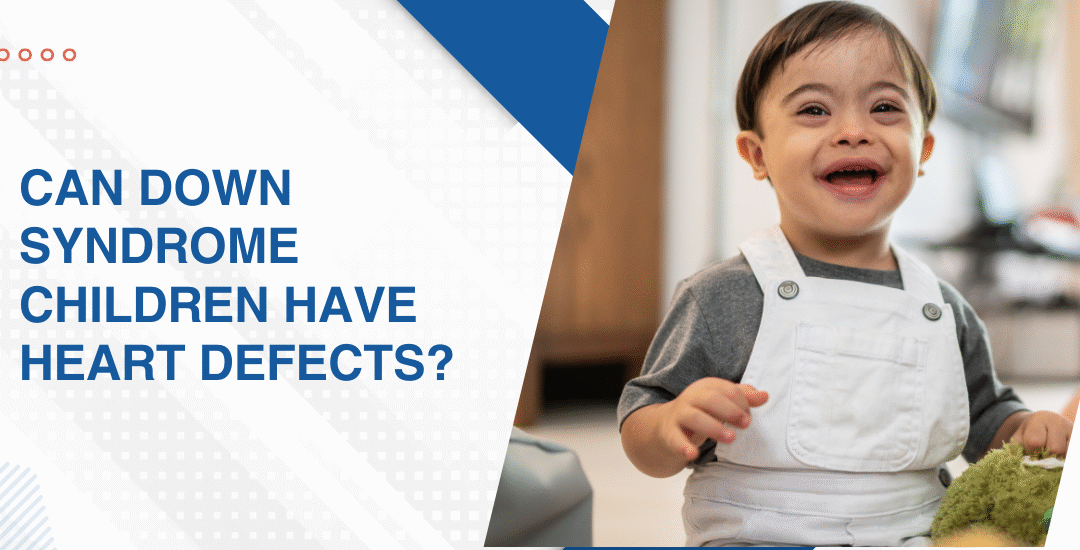
Yes and the number is higher than most families expect. Around 40 to 50 percent of children born with Down syndrome have a congenital heart defect and in many cases that defect is the most urgent medical issue in the first weeks of life, not the chromosomal diagnosis itself. Holes between chambers, malformed valves, abnormal connections these need a cardiac assessment from day one, not somewhere down the line when symptoms finally show up.
“When a Down syndrome baby is born I want an echo done before that family leaves the hospital. Not because something might be wrong. Because nearly half the time something is wrong and the families who find out late are the ones with the hardest conversations ahead,” says Dr. Prashant Bobhate, Pediatric Cardiologist in Mumbai, India.
What Heart Defects Are Common in Down Syndrome Children?
Not random. There’s a very specific pattern to the cardiac defects that show up in Down syndrome and knowing that pattern is what lets a specialist move fast rather than investigate from scratch.
- AVSD: This one is almost diagnostic of Down syndrome on its own a large hole spanning both the atrial and ventricular septa with a single malformed valve where two valves should normally exist, and it almost always needs surgery before six months.
- VSD: These show up frequently in Down syndrome children and size is everything here because a small VSD might close on its own while a large one is already overloading the lungs from the first weeks of life.
- ASD: Smaller atrial defects get dismissed more than they should and even the ones causing no immediate haemodynamic trouble need a proper echo follow-up plan rather than a handwave and a come-back-later.
- TOF: A smaller proportion but it happens and a Down syndrome child with tetralogy of Fallot needs urgent specialist input because that combination doesn’t give you the luxury of watching and waiting.
Every Down syndrome child needs a full cardiac assessment from birth and congenital heart disease evaluation is what maps the anatomy, the pressures and the plan before time runs out on the safest window for correction.
When and How Are These Defects Treated?
Prevention first. Then damage control. Surgery only when the valve has gone too far.
- Penicillin injections: Any child who has had confirmed rheumatic fever needs monthly benzathine penicillin for years, sometimes decades, to stop recurrent strep from adding more damage to what’s already there.
- Echo surveillance: Regular echocardiography tracks how the valve is changing and catches the point where waiting becomes genuinely riskier than stepping in and doing something about it.
- Symptom medications: Diuretics and vasodilators manage the haemodynamic load in symptomatic children who aren’t yet at the threshold where a procedure becomes the better option.
- Balloon or surgery: When mitral stenosis is severe enough to impair output and daily life, balloon dilatation or surgical repair is the only real way to restore forward flow and give the left atrium some relief.
Parents wanting to understand what cardiac warning signs look like in children before any formal valve diagnosis gets made should read this piece on top 5 warning signs of pediatric heart failure because catching it early is always what keeps the most options open.
Why Choose Dr. Prashant Bobhate for Down Syndrome Heart Care in Mumbai?
Most families with a Down syndrome diagnosis are already managing more information than they expected in those first days. They don’t need vague optimism from a cardiologist who sees one AVSD a year. They need someone who can look at the echo, say plainly what’s there and tell them exactly what happens next and when. Dr. Prashant Bobhate has spent over 12 years managing congenital heart disease in Down syndrome children across every defect type, every complexity and every stage from neonatal diagnosis through surgical planning and long term follow up at the Children’s Heart Centre, Kokilaben Dhirubhai Ambani Hospital.
Schedule a consultation to find out if a cure is possible and what the right treatment plan looks like for you.
FAQs
Do all Down syndrome children have heart defects?
No but nearly half do and an echo at birth is non-negotiable for every single one of them regardless of what the clinical exam shows.
What is the most common heart defect in Down syndrome?
AVSD a large combined hole in both septa with a malformed valve and it needs surgical repair before six months in most cases
Can Down syndrome heart defects be safely operated on?
Yes and outcomes are good in experienced centres when the timing is right and lung pressures haven’t already climbed to where surgery becomes the riskier option.
What happens if the defect goes untreated?
Irreversible lung damage within the first year of life. Surgery becomes impossible and the child is left managing a condition that was entirely preventable if anyone had acted earlier.
References:
- Congenital Heart Defects, MedlinePlus, U.S. National Library of Medicine — https://medlineplus.gov/congenitalheartdefects.html
- Down Syndrome and Congenital Heart Defects, National Heart Lung and Blood Institute — https://www.nhlbi.nih.gov/health/congenital-heart-defects