
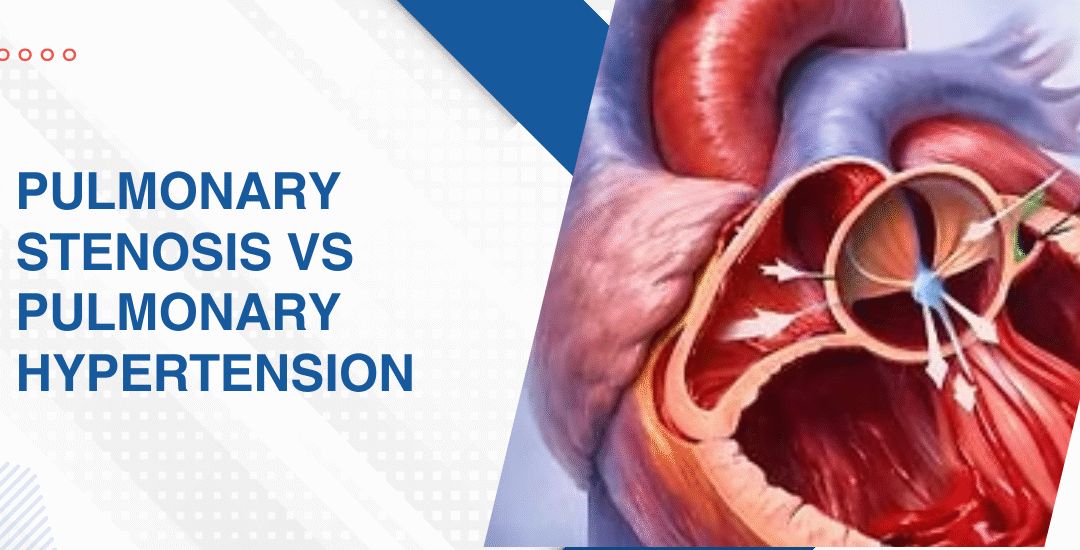
No, not even close. Pulmonary stenosis is a structural problem where the pulmonary valve is narrowed and obstructs blood from flowing out of the right ventricle. Pulmonary hypertension is a pressure problem where the blood vessels inside the lungs become abnormally resistant to flow. Same word at the front. Completely different diseases, different mechanisms and very different treatment paths.
“I explain it this way every time. Stenosis is a blocked gate. Hypertension is a flooded road. Both stress the right heart but for entirely different reasons and treating one like the other would be a serious mistake,” says Dr. Prashant Bobhate, Pediatric Cardiologist in Mumbai, India.
What Makes Device Closure the Right Choice for Some ASDs?
Pulmonary stenosis is a congenital structural defect. The valve leaflets are thickened, fused or malformed and that physical obstruction is what forces the right ventricle to generate higher pressure just to push blood through a narrowed opening it was never designed to fight against.
- The valve is the problem: In pulmonary stenosis the obstruction sits at the valve itself and the right ventricle thickens over time trying to overcome that fixed mechanical resistance with every single beat.
- Usually congenital: Most cases are present from birth, often picked up on fetal echo or early newborn screening, and mild stenosis can sit quietly for years while severe stenosis in a newborn needs intervention within days.
- Balloon valvuloplasty fixes it: Moderate to severe pulmonary stenosis is treated by inflating a catheter balloon across the narrowed valve to split the fused leaflets open and the results in experienced hands are excellent without open heart surgery in most cases.
- Pressure normalises after treatment: Once the obstruction is relieved the right ventricular pressure drops, the ventricle gradually de-thickens and most children go on to live entirely normal cardiac lives with periodic echo surveillance to confirm the valve stays adequate.
Understanding exactly what the pulmonary valve looks like and how much obstruction it’s generating is the first thing a proper pulmonary hypertension and structural evaluation maps out before anyone makes a management decision.
When Does Open Heart Surgery Become the Only Answer?
A completely different disease. The valve is fine. The problem is deeper inside the lungs.
- Vessel walls are the problem: In pulmonary hypertension the small arteries inside the lung tissue thicken, stiffen and narrow from the inside out and that progressive vascular resistance is what forces the right heart to push harder against a resistance it can never physically remove with a catheter balloon.
- Multiple causes: PH can be idiopathic, secondary to congenital heart disease, autoimmune conditions, chronic lung disease or genetic mutations and identifying the underlying cause is what determines which drug pathway gets targeted first.
- Treated with medications not procedures: Unlike stenosis there’s no valve to open or obstruction to cross because the resistance is distributed across millions of tiny vessels inside both lungs and management means targeted drug combinations working on specific molecular pathways simultaneously.
- Progressive without treatment: Untreated pulmonary hypertension causes progressive right heart failure over months to years and the window for getting combination therapy started early before irreversible vascular remodelling sets in is something that genuinely cannot be recovered once it closes.
Families wanting to understand what the treatment journey for pulmonary hypertension actually looks like in real patients should read this piece on sotatercept changing how PAH is managed because the gap between what was possible two years ago and what’s achievable now for PH patients is significant and still widening.
Why Choose Dr. Prashant Bobhate for Pulmonary Valve and PH Care in Mumbai?
You need someone who can look at a right ventricular pressure of 80mmHg on echo and tell you immediately whether that’s coming from a stenotic valve that a balloon can fix in one sitting or from pulmonary vascular disease that needs a three-drug combination and a decade of follow up. Those are not the same conversation and they don’t belong with the same cardiologist. Dr. Prashant Bobhate has spent over 12 years managing both structural right heart disease including pulmonary stenosis and balloon valvuloplasty and complex pulmonary hypertension across every cause and every age group at the Children’s Heart Centre, Kokilaben Dhirubhai Ambani Hospital.
Schedule a consultation to find out if a cure is possible and what the right treatment plan looks like for you.
FAQs
Can a child have both pulmonary stenosis and pulmonary hypertension?
Yes and it happens in some congenital heart conditions where a structural defect has also driven up pulmonary pressures over time and distinguishing the contribution of each requires detailed catheterisation not just an echo.
Is pulmonary stenosis serious in children?
Mild stenosis often needs only monitoring but moderate to severe stenosis needs balloon valvuloplasty before the right ventricle sustains the kind of pressure overload damage that doesn’t fully reverse even after the obstruction is relieved.
Can pulmonary hypertension be mistaken for pulmonary stenosis?
It can on a basic assessment because both cause right heart pressure elevation but an echocardiogram in experienced hands distinguishes them clearly and the treatment implications of getting that distinction wrong are significant.
Does pulmonary stenosis cause pulmonary hypertension?
Not directly but longstanding unrepaired stenosis causes right heart dysfunction that can indirectly affect pulmonary circulation and some congenital defects that include pulmonary stenosis also carry independent pulmonary hypertension risk.
References:
- Pulmonary Stenosis, MedlinePlus, U.S. National Library of Medicine — https://medlineplus.gov/ency/article/001096.htm
- Pulmonary Arterial Hypertension, National Heart Lung and Blood Institute — https://www.nhlbi.nih.gov/health/pulmonary-hypertension