What Is A Potts Shunt In Children?

What Is A Potts Shunt In Children?

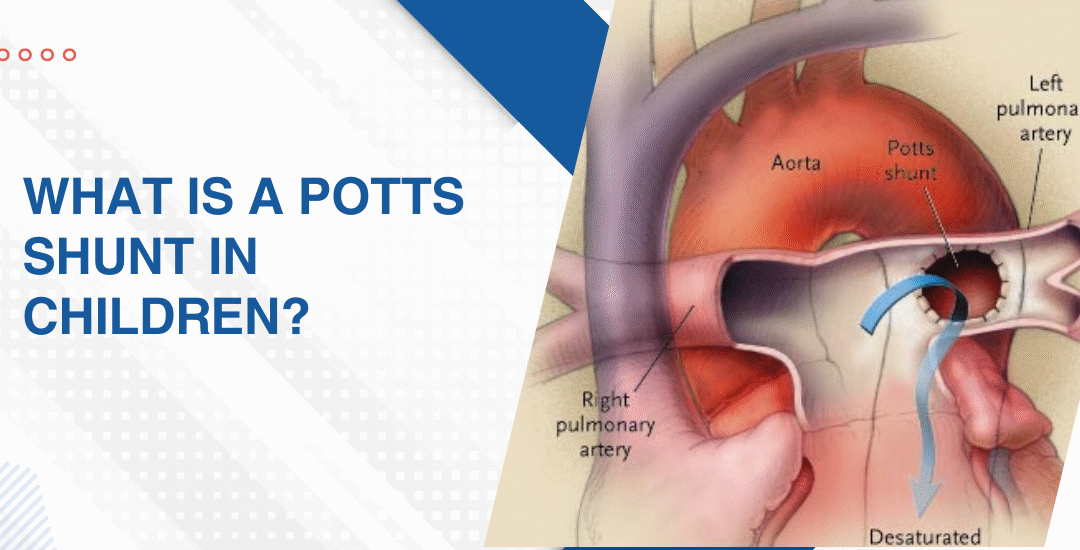
The Potts shunt is a surgically or catheter-created connection between the left pulmonary artery and the descending aorta that gives the right ventricle a pressure release valve when pulmonary hypertension has become so severe the right heart can no longer sustain it safely on its own. It doesn’t cure pulmonary hypertension.

“The Potts shunt is one of the most misunderstood procedures in paediatric pulmonary hypertension care because families hear it described as a last resort and immediately interpret that as giving up when it’s actually the opposite.” says Dr. Prashant Bobhate, Pediatric Cardiologist in Mumbai, India.

What Does the Potts Shunt Actually Do for a Child's Heart?

It creates a deliberate right-to-left shunt at the level of the great vessels that allows the overloaded right ventricle to decompress directly into the aorta rather than continuing to push against a pulmonary vascular resistance it can no longer overcome.

  • Right ventricular decompression: The shunt allows blood to bypass the high-resistance pulmonary circulation entirely which immediately reduces the pressure load on a right ventricle that was heading toward failure and gives the chamber a chance to recover function it was rapidly losing.
  • Maintains cardiac output: A failing right ventricle in severe PH can no longer maintain adequate systemic circulation and the Potts shunt preserves overall cardiac output even at the cost of some arterial oxygen desaturation which is an acceptable trade-off when the alternative is right heart collapse.
  • Bridge to transplant: In children who are maxed out on medical therapy and deteriorating despite everything, the Potts shunt buys enough haemodynamic stability to reach lung transplant listing criteria and survive the wait in a condition where transplant is actually still feasible.
  • Transcatheter approach: India’s first successful transcatheter Potts shunt was performed at this centre using a catheter-based technique rather than open surgery which reduces the procedural risk significantly in children who are already haemodynamically fragile and couldn’t safely tolerate a sternotomy at that point in their disease.

Understanding what interventional options exist for children with severe pulmonary hypertension who have exhausted conventional medical pathways is exactly what a thorough interventional treatment for pulmonary hypertension assessment maps out before any decision gets made.

Which Children With PH Actually Need a Potts Shunt?

A very specific group. Not every child with PH. Not even every child with severe PH.

  • Suprasystemic RV pressure: Children whose right ventricular pressure has risen above systemic pressure on maximal combination medical therapy are the primary candidates because at that level the right heart is in imminent danger of irreversible failure and the shunt is the only intervention that immediately addresses the mechanical crisis.
  • Failing on maximal therapy: A child already on triple combination PH therapy including a prostacyclin who continues to deteriorate clinically and haemodynamically is telling you the medical ceiling has been reached and the next decision is either the Potts shunt or palliative management with no bridge to anything.
  • Pre-transplant stabilisation: Children being evaluated for lung transplant who are too unstable to survive the wait on medical therapy alone are given the Potts shunt to stabilise their haemodynamics long enough to get listed, wait and reach the transplant in a condition where it can actually succeed.
  • Not suitable for everyone: Children with significant left heart disease, severe aortic regurgitation or unfavourable anatomy at the shunt site aren’t candidates and the decision requires detailed catheterisation data, imaging and a team that has actually performed this procedure rather than read about it.

Parents wanting to understand how severe pulmonary hypertension can progress and why options like Potts shunt may become necessary should also read about when lung transplant is needed in pulmonary hypertension.

Why Choose Dr. Prashant Bobhate for Potts Shunt and Severe PH Care in Mumbai?

Dr. Prashant Bobhate performed India’s first successful transcatheter Potts shunt and has over 12 years of expertise managing complex paediatric pulmonary hypertension cases at Kokilaben Dhirubhai Ambani Hospital, including advanced interventions, triple therapy management, transplant bridging, and severe cases requiring specialised multidisciplinary pulmonary hypertension care.

Schedule a consultation to find out if a cure is possible and what the right treatment plan looks like for you.

FAQs

Is the Potts shunt a cure for pulmonary hypertension in children?

No, it’s a pressure relief procedure that reduces right ventricular strain and buys time but the underlying pulmonary vascular disease continues and medical therapy must be maintained alongside it.

How is a transcatheter Potts shunt different from surgical Potts shunt?

The transcatheter approach creates the same shunt through a catheter without opening the chest which significantly reduces procedural risk in children who are already haemodynamically compromised and couldn’t safely tolerate open surgery.

Which hospital in Mumbai performs the Potts shunt for children?

The Children’s Heart Centre at Kokilaben Dhirubhai Ambani Hospital where India’s first transcatheter Potts shunt was performed is one of the very few centres in the country with experience in this specific procedure.

Can a child live normally after a Potts shunt?

Most children have improved exercise tolerance and quality of life after the shunt due to right ventricular decompression but they remain on PH medications and require close ongoing specialist follow up indefinitely.

References:

How Long Does a Child’s Open Heart Surgery Take?

How Long Does a Child’s Open Heart Surgery Take?

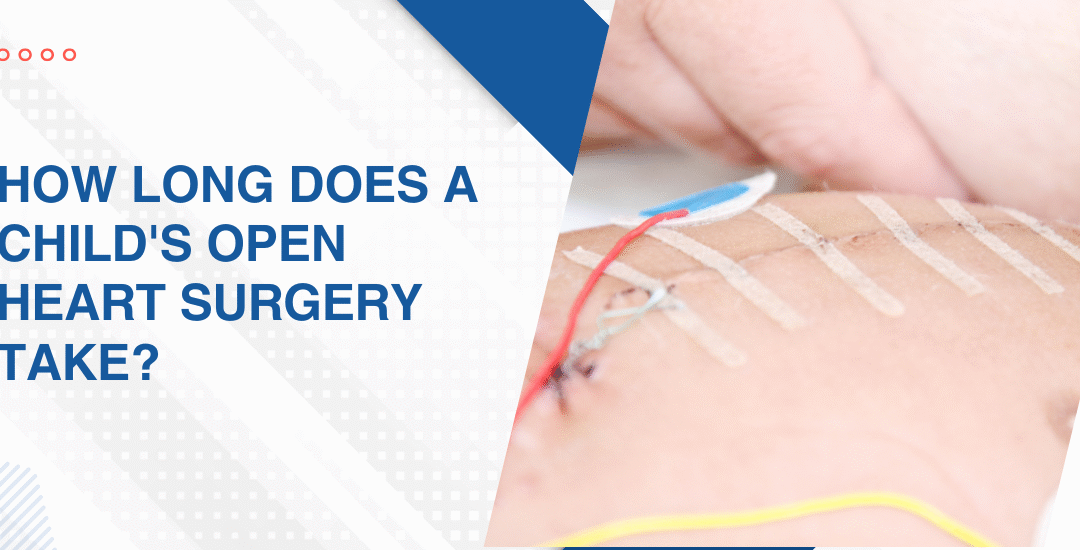
A child’s open-heart surgery usually takes about 3 to 6 hours, although more complex procedures may take longer. During the operation, the child is placed on a heart-lung machine. After surgery, most children require 2 to 4 days in the ICU, followed by a total hospital stay of around 5 to 7 days. In more complex cases, recovery in the hospital can extend to several weeks.

“Families fixate on the duration in the waiting room and I understand why but the number that actually matters isn’t how long the surgery took it’s what the surgeon says when they come out to tell you how it went,” says Dr. Prashant Bobhate, Pediatric Cardiologist in Mumbai, India.

What Determines How Long the Surgery Actually Takes?

The anatomy underneath the diagnosis is what sets the surgical clock and two children with the same condition can have repairs of very different complexity and duration depending on what the surgeon actually encounters.

  • Defect type: Simple secundum ASD or isolated VSD closures are among the shorter cardiac procedures, while complex repairs involving outflow tract reconstruction, valve work or multiple simultaneous defects add significant time under bypass that straightforward closures don’t need.
  • Bypass time: The time the heart is stopped and the child is on cardiopulmonary bypass is the most clinically significant part of the duration because longer bypass times carry a higher risk of post-operative complications, and surgeons manage this carefully, not just to be efficient but because it directly affects outcomes.
  • Unexpected findings: Sometimes the anatomy is more complex than the pre-operative echo suggested, an additional defect is found, a valve is more abnormal than imaging showed or tissue quality requires a different repair approach and all of these extend theatre time in ways nobody could predict before opening the chest.
  • Redo surgery: A child who has already had one cardiac operation and needs a second carries scar tissue, adhesions and altered anatomy from the first repair and dissecting through that safely adds significant time before the actual correction even begins.

Understanding what a child’s specific defect requires in terms of surgical repair and what the recovery looks like afterwards is exactly what a thorough congenital heart disease consultation maps out before any theatre date is confirmed.

What Happens While You Are Waiting?

The hardest hours most cardiac families will ever sit through.

  • Bypass team updates: Most centres provide a liaison nurse or team member who updates the waiting family at key surgical milestones and if your centre doesn’t offer this ask specifically before admission day because waiting six hours in silence is genuinely harder than it needs to be.
  • Why it’s taking longer: A surgery running over the estimated time doesn’t automatically mean something has gone wrong and it’s often the surgeon being more careful or finding something that needed extra attention rather than an emergency and the team should be telling you which it is.
  • Anaesthesia and bypass monitoring: While the surgeon works a separate team manages the bypass circuit, the anaesthesia, the child’s temperature, blood pressure and organ perfusion continuously and the size of the team in that theatre is something most families never see and would find reassuring if they did.
  • Coming out of bypass: Weaning the heart off cardiopulmonary bypass and restoring normal rhythm is a distinct phase at the end of the operation that can itself take thirty minutes to an hour and families told the surgery is finishing should expect another wait before the surgeon actually appears in the waiting area.

Parents wanting to understand what the warning signs of cardiac deterioration look like in children in the days and weeks after open heart surgery should read this piece on the top 5 warning signs of pediatric heart failure, because knowing what to watch for at home is as important as understanding what happened in the operating theatre.

Why Choose Dr. Prashant Bobhate for VSD Device Closure in Mumbai?

A family sitting in a waiting room for four hours deserves a team that keeps them informed, prepares them before the surgery for what longer theatre times might mean and doesn’t leave them alone with catastrophic imagination filling the silence. That preparation starts at the pre-surgical cardiology appointment not on the day. Dr. Prashant Bobhate has spent over 12 years preparing families for paediatric cardiac surgery across every defect type and complexity at the Children’s Heart Centre, Kokilaben Dhirubhai Ambani Hospital. Escorts Heart Institute New Delhi.

Schedule a consultation to find out if a cure is possible and what the right treatment plan looks like for you.

FAQs

How long does a VSD repair take in a child?

Roughly two to three hours including bypass time for a straightforward isolated VSD but complex anatomy, additional defects or difficult tissue can extend the duration beyond what the pre-operative estimate suggested.

Is longer surgery more dangerous for a child's heart?

Longer bypass time does carry higher post-operative risk which is why surgeons actively manage bypass duration but a complex repair done carefully over six hours is safer than a rushed repair done poorly in three.

Why does a re-do heart surgery take longer in children?

Scar tissue and adhesions from the first operation have to be carefully dissected before the actual correction can begin and that process alone adds significant time before the repair itself even starts.

How will I know if my child's surgery is taking too long?

Ask the centre before admission day to assign a liaison who updates the family at key milestones because no family should have to guess what’s happening in that theatre for hours without any communication from the team.

References:

Recovery Time After VSD Device Closure in Children

Recovery Time After VSD Device Closure in Children

Most children go home within one to two days of VSD device closure and return to normal activity within one to two weeks. No chest opening, no bypass, no long ICU stay. But faster recovery doesn’t mean no recovery, and the first month after the procedure carries specific restrictions, medications, and follow-up echo requirements that need to be followed properly for the device to settle safely into position.

“Parents are often surprised by how quickly their child bounces back after device closure compared to what they were imagining open heart surgery would look like, and that’s genuinely one of the things that makes catheter-based closure the right answer when the anatomy supports it,” says Dr. Prashant Bobhate, Pediatric Cardiologist in Mumbai, India.

What Does the Immediate Recovery Look Like After VSD Device Closure?

The first 48 hours are monitored, structured, and very different from what families imagine open-heart recovery involves because this procedure doesn’t touch the chest wall at all.

  • Same day monitoring: After the procedure, the child is observed in a monitored bed for several hours to confirm the device is sitting correctly, the heart rhythm is stable, and there’s no significant residual shunting visible on the post-procedure echo before anyone talks about the ward.
  • Hospital stay: Most children spend one night in the hospital after uncomplicated device closure and are discharged the following morning once the team is satisfied with the rhythm, the echo findings, and the child’s overall clinical status.
  • Catheter site care: The entry point in the femoral vein or artery needs to be kept clean and dry for several days, and physical activity that strains the groin area needs to be avoided for at least a week to allow the access site to heal without complication.
  • Going home medications: Aspirin for antiplatelet cover is prescribed for six months after most VSD device closures to reduce the risk of clot formation on the device surface while the heart tissue grows over it, and this medication needs to be given exactly as prescribed without gaps.

Understanding what the full picture of VSD management looks like from diagnosis through closure through long-term follow-up is exactly what a thorough ventricular septal defect assessment maps out before any intervention decision gets made.

What Are the Activity and Follow-Up Restrictions After Discharge?

More specific than most families expect from a catheter procedure.

  • First two weeks: No running, jumping, contact sport or rough play because the device is still embedding into the septal tissue and any significant physical impact during this window carries a small but real risk of device displacement before tissue ingrowth is complete.
  • Return to school: Most children can return to school within one to two weeks but need to be excused from physical education, sports and any activity involving physical contact for the full first month until the follow-up echo confirms the device is stable and well positioned.
  • One month echo: This is the most important follow-up appointment in the entire post-closure period because it confirms device position, checks for residual shunting, assesses the rhythm and determines whether the antiplatelet medication continues or can be reviewed at the next visit.
  • Six month review: A second echo at six months confirms complete tissue coverage of the device, checks valve function on both sides of the septum and gives the cardiologist the information needed to formally close the active surveillance phase or flag anything that needs continued monitoring.

Parents wanting to understand what cardiac warning signs look like in children in the weeks after any cardiac procedure should read this piece on top 5 warning signs of pediatric heart failure because knowing what to watch for at home is as important as knowing what happened in the catheterisation lab.

Why Choose Dr. Prashant Bobhate for VSD Device Closure in Mumbai?

VSD device closure isn’t just the procedure on the day. It’s the echo assessment that confirms the anatomy supports a device, the catheterisation performed precisely enough that the device sits without residual shunting, and the follow-up plan that catches anything that changes in the months after. All of that in one place. Dr. Prashant Bobhate has spent over 12 years performing catheter-based VSD closures and managing the full post-procedure surveillance pathway at the Children’s Heart Centre, Kokilaben Dhirubhai Ambani Hospital. Escorts Heart Institute, New Delhi. Fellowship at the University of Alberta, Canada. Over 400 children are on active cardiac therapies right now. He doesn’t hand a family a discharge summary and step back. He follows the device until the heart has made it its own.

📞 Call Now: (+91) 8080 826 898 A proper VSD assessment tells you whether device closure is anatomically possible for your child, what the procedure involves, and exactly what the recovery and follow-up plan looks like from day one through six months.

Schedule a consultation to find out if a cure is possible and what the right treatment plan looks like for you.

FAQs

How long does a child need to stay in hospital after VSD device closure?

Usually one night and most children are discharged the following morning once the post-procedure echo and heart rhythm are confirmed to be satisfactory by the cardiac team.

When can a child go back to school after VSD device closure?

Most children return to school within one to two weeks but need to avoid physical education and contact sport for the full first month until the one month echo confirms the device is stable.

Is aspirin always needed after VSD device closure?

Yes for six months in most cases to reduce clot formation on the device surface while the heart tissue grows over it and it needs to be given exactly as prescribed without missing doses.

What are the warning signs to watch for at home after VSD device closure?

Fast or irregular heartbeat, breathlessness, pallor, poor feeding in infants or any return of the symptoms the child had before closure are all signs that need same day cardiac assessment without waiting for the scheduled follow-up.

References:

Questions to Ask Before Your Child’s Heart Surgery

Questions to Ask Before Your Child’s Heart Surgery

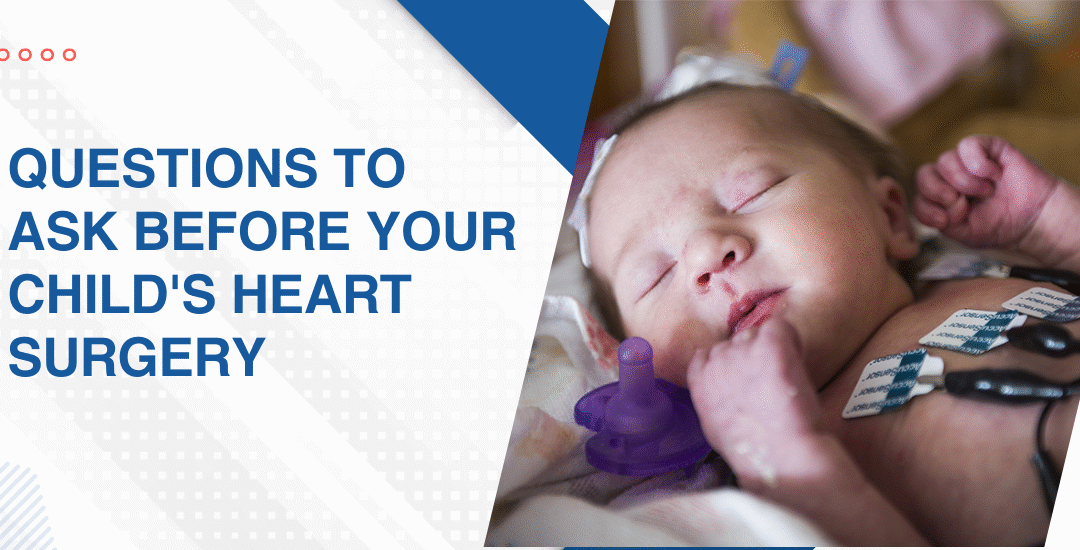
Ask everything. Before the surgery date is the only time every question has a calm, considered answer. What defect is being repaired and why now. What the procedure involves step by step. What the ICU will look like when you first see your child after. What the recovery timeline is. What the risks are for this specific child, not the average child in a textbook. Write them down. Bring the list.

“I tell every family the same thing at the pre-surgical appointment. If you leave this room with an unanswered question that’s on me not on you. Ask it again, ask it differently, ask it as many times as you need until the answer actually makes sense to you,” says Dr. Prashant Bobhate, Pediatric Cardiologist in Mumbai, India.

What Should You Ask the Surgical and Cardiac Team?

The clinical questions are the ones most families forget to ask because the emotional weight of the appointment crowds them out and then they remember them at two in the morning three days later.

  • Why now: Ask specifically why surgery is recommended at this point rather than earlier or later because the timing of paediatric cardiac surgery is a deliberate clinical decision based on pressure measurements, growth trajectory and ventricular function and you deserve to understand the reasoning not just accept the date.
  • What exactly happens: Ask the surgeon to walk through the procedure in plain language, what the chest opening involves, how bypass works, how long the heart will be stopped and what the team does during that time because parents who understand the steps are far less consumed by catastrophic imagination in the waiting room.
  • What are the real risks: Ask for the specific risks for your child’s defect and age not a generic list off a consent form because a VSD closure in a healthy eight month old carries different risk than the same procedure in a child with rising pulmonary pressures or a concurrent infection and you need to understand which conversation you’re actually in.
  • What does success look like: Ask what a good outcome means for this specific defect because for some repairs success means complete correction and a normal life and for others it means significant improvement with ongoing monitoring and that distinction matters enormously for how a family orients their expectations going forward.

Getting a full picture of what paediatric cardiac intervention involves and what specialist-level care looks like before making any surgical decision is exactly what a thorough congenital heart disease consultation provides before any admission date is set.

What Questions Cover the Recovery and After?

Equally important. Most families forget these entirely.

  • ICU timeline: Ask how long your child is expected to be in cardiac ICU, what they’ll look like when you first see them after surgery and which tubes, lines and monitors to expect because the first post-operative ICU visit is significantly less frightening when you’ve been told in advance what you’ll see walking through that door.
  • Pain management: Ask specifically how pain is managed in the post-operative period because a child in uncontrolled pain after cardiac surgery recovers more slowly and parents who advocate clearly for adequate analgesia get better outcomes than those who assume the team will manage it without being asked.
  • Discharge criteria: Ask what the team needs to see before your child goes home because families who know the specific milestones, feeding tolerance, oxygen levels, wound healing, understand why discharge is or isn’t happening rather than feeling helpless in a waiting pattern with no visible end.
  • Follow-up schedule: Ask exactly when the first post-operative echo is, what it’s looking for, who does it and what would prompt an earlier return because going home after open heart surgery without a clear follow-up plan in hand is something no family should accept at discharge regardless of how busy the ward is.

Parents wanting to understand what the warning signs of cardiac deterioration look like in children in the weeks after any major cardiac procedure should read this piece on top 5 warning signs of pediatric heart failure because knowing what to watch for at home is as important as knowing what happened in the operating theatre.

Why Choose Dr. Prashant Bobhate for Children's Heart Surgery in Mumbai?

A family walking into a pre-surgical appointment deserves a cardiologist who has time for every question including the ones they’re embarrassed to ask and the ones they don’t yet know they need to ask. Not a fifteen minute slot before the next patient. A real conversation that leaves nobody confused about what’s coming. Dr. Prashant Bobhate has spent over 12 years preparing families for paediatric cardiac surgery across every defect complexity and every level of prior medical knowledge at the Children’s Heart Centre, Kokilaben Dhirubhai Ambani Hospital. Escorts Heart Institute New Delhi. Fellowship at University of Alberta Canada. Over 400 children on active cardiac therapies right now. He doesn’t move on until the family understands. That’s not a service promise. It’s just how the appointments run.

📞 Call Now: (+91) 8080 826 898 A proper pre-surgical consultation answers every question about the procedure, the recovery and what comes after so your family walks into that surgery date knowing exactly what to expect at every stage.

Schedule a consultation to find out if a cure is possible and what the right treatment plan looks like for you.

FAQs

How do I prepare a list of questions for my child's heart surgery appointment?

Write down every worry that wakes you up at night because those are the real questions and bring the list to the appointment rather than trying to remember them in the room under pressure.

Should both parents attend the pre-surgical consultation?

Yes if possible because two people in the room hear differently, catch different things and can check each other’s understanding in the car home rather than one person carrying the entire information load alone.

Is it normal to feel scared asking questions about risks before heart surgery?

Completely normal but asking about risks before surgery is always better than not knowing them because understanding the real risk picture for your specific child is what informed consent actually means.

What if I think of more questions after leaving the appointment?

Call or message the team because no question that arrives after a pre-surgical appointment is too late or too minor to deserve an answer before the surgery date arrives. 

References:

 How to Prepare Your Child for Open Heart Surgery

 How to Prepare Your Child for Open Heart Surgery

Preparation starts weeks before the surgery date not the night before. The surgical team needs blood work, echo, anaesthesia assessment and medication adjustments done in advance. Parents need to understand what the pre-op protocol requires, what to expect on admission day and what the ICU looks like after the operation so the first time they see any of it isn’t also the most frightening day of their child’s life.

“The families who come in most prepared are almost always the ones who asked every question at the pre-surgical appointment rather than waiting until they were standing outside the OT. There are no foolish questions before open heart surgery on a child. None,” says Dr. Prashant Bobhate, Pediatric Cardiologist in Mumbai, India.

What Does Medical Preparation Before Surgery Actually Involve?

It’s more structured than most parents expect and every step has a reason behind it that the team should be explaining clearly rather than handing over a checklist without context.

  • Pre-op investigations: Blood counts, coagulation profile, kidney and liver function, chest X-ray and a final echo confirming the surgical anatomy are all completed before admission and any abnormal finding at this stage changes the surgical timing or approach so nothing gets skipped.
  • Medication adjustments: Some cardiac medications need to be continued right up to the morning of surgery while others including certain diuretics and anticoagulants need to be stopped days before and getting this wrong at home is one of the most common avoidable pre-surgical complications families face.
  • Fasting instructions: Specific fasting windows for solids and liquids vary by the child’s age and the anaesthetic protocol and following them exactly matters because a full stomach on the morning of cardiac surgery under general anaesthesia creates a real risk that strict fasting eliminates entirely.
  • Infection check: Any active respiratory infection, fever, skin infection or dental procedure in the weeks before scheduled cardiac surgery is grounds for postponement because operating on an infected child under bypass carries risks that simply aren’t worth taking when postponing two weeks eliminates them.

Understanding what the recovery period looks like after a paediatric cardiac procedure and what warning signs to watch for is exactly what a thorough pediatric heart failure management consultation covers before any surgical admission is confirmed.

How Do You Prepare Your Child and Yourself Emotionally?

Honestly. Without pretending it’s nothing.

  • Age-appropriate honesty: A four year old and a twelve year old need different conversations but both need something true and a child who is told nothing and then wakes up in a cardiac ICU with tubes and monitors everywhere is dealing with shock on top of surgery which is genuinely harder to recover from than one who knew roughly what to expect.
  • Hospital visit beforehand: Some centres allow families to see the ICU and recovery area before admission day and for older children especially this single visit removes more anxiety than any amount of reassurance at home because the imagined version of an ICU is almost always worse than the actual one.
  • Siblings and family: Other children in the family need age-appropriate information too because a sibling who is told nothing and then sees a parent disappear to a hospital for days while the house goes quiet experiences a kind of fear that honest simple words beforehand would have reduced significantly.
  • Your own anxiety: Children read their parents more accurately than most parents realise and a parent who is visibly terrified on admission morning makes a frightened child more frightened regardless of what words are being said so getting your own questions fully answered at the pre-surgical appointment isn’t just for you it’s directly for them.

Parents who want to understand what cardiac warning signs look like in children before any surgical admission becomes the conversation should read this piece on how to spot the early signs of heart disease in neonates because the earlier the right team is involved the more time there is to prepare properly rather than rushing.

Why Choose Dr. Prashant Bobhate for Children's Heart Surgery Preparation in Mumbai?

Open heart surgery on a child is not a day. It’s a process that starts at the first cardiology appointment and doesn’t end at discharge and families need a team that treats it that way rather than handing them a surgery date and a pre-op checklist and calling that preparation. Dr. Prashant Bobhate has spent over 12 years walking families through the full arc of paediatric cardiac care from initial diagnosis through surgical planning through post-operative recovery and long term follow up at the Children’s Heart Centre, Kokilaben Dhirubhai Ambani Hospital. Escorts Heart Institute New Delhi. Fellowship at University of Alberta Canada. Over 400 children on active cardiac therapies right now. He makes sure families know exactly what’s happening and why at every single step.

📞 Call Now: (+91) 8080 826 898 A proper pre-surgical assessment tells you exactly what your child needs before the operation, what to expect during recovery and what the follow-up plan looks like so nothing about the process comes as a surprise.

Schedule a consultation to find out if a cure is possible and what the right treatment plan looks like for you.

FAQs

What should my child eat or drink before open heart surgery?

Follow the specific fasting instructions given by the surgical team exactly because the timing for solids and liquids varies by age and anaesthetic protocol and deviating from them on surgery morning creates avoidable risks.

Should I tell my child about the open heart surgery beforehand?

Yes in age-appropriate terms because a child who wakes up in a cardiac ICU without any preparation is dealing with shock on top of surgery and honest simple words beforehand make the experience significantly less frightening.

Can surgery be postponed if my child has a cold before the operation?

 Yes and it should be because operating on a child with an active respiratory infection under cardiopulmonary bypass carries real risks that a two week postponement until full recovery simply eliminates.

What should I bring to the hospital on my child's surgery day?

Comfort items the child knows like a familiar toy or blanket, all current medications with their names and doses, insurance and identification documents and any recent investigation reports the surgical team hasn’t already received.


References:


Call Now Button